What contrast therapy is
Contrast therapy is the modern name for something people have done for centuries: get very warm, then get cold, then rest. In Finland that might mean a
Each half does something different. In a hot sauna your skin warms quickly, you sweat heavily and your heart beats faster to push blood towards the skin; Harvard Health Publishing notes that the pulse can rise by 30% or more. Cold water reverses that. Blood vessels in the skin narrow, you take an involuntary gasp, and heart rate and blood pressure jump for the first minute or so before your breathing settles. Moving between the two is a strong stimulus, which is why it feels so clearing, and also why it is not for everyone.
The sauna and the steam room both count as the heat. A sauna heats the air to a high temperature; a steam room is cooler but saturated with moisture, so it feels hotter than the number suggests. For the cold, an ice bath is the sharpest option, while a cold shower or a cool pool is a gentler way to start.
Order and timing: a simple routine
There is no official protocol, but most routines look like this:
- Shower first. Rinse off before the hot room and again before any cold plunge, so the water stays clean.
- Heat: 8 to 15 minutes. On a first visit, five to ten minutes is enough. General advice from Harvard Health Publishing is to stay no longer than 15 to 20 minutes.
- Cool shower: 30 seconds or so. It takes the edge off before the plunge.
- Cold: 30 seconds to 2 minutes. Get in slowly, breathe out long and steady, and get out before you start to shiver hard.
- Rest: 5 to 10 minutes. Sit somewhere comfortable, let your body warm up on its own and drink water.
- Repeat two to four times, then stop while you still feel good.
Sauna or ice bath first? Heat first is the usual order. A warm body copes with cold water far better than a cool one, and the contrast is the point. Starting cold can make the first minutes in the ice feel much harsher.
Finish on hot or cold? Either is fine. Some people like to end on cold for the fresh, awake feeling; others finish with a last warm round or a swim so they leave relaxed. If you plan to sleep soon afterwards, a warm finish and a slow
After training? Heat and cold both fit after a workout, but leave a few minutes to cool down and drink first. If you are training for strength or muscle size, read the research section below before you make the ice bath a habit straight after lifting.
What the research says about sauna and ice bath benefits
In short: some benefits, smaller than social media suggests, and mostly from small studies.
Muscle soreness. A 2012 Cochrane review pooled 17 small trials with 366 people and found that sitting in cold water after exercise reduced muscle soreness over the following one to four days compared with resting. The authors rated the evidence as low quality, and it was no better than other recovery methods such as warm water or active recovery. A 2013 review in PLOS ONE looked at alternating hot and cold water, which is contrast therapy in its strict sense, and found the same pattern: better than doing nothing, not clearly better than the alternatives.
Stress, sleep and wellbeing. A 2025 systematic review in PLOS ONE combined 11 trials with 3,177 healthy adults who used cold showers, ice baths or plunges at 15 °C or colder. Stress was lower 12 hours after immersion, and some studies reported better sleep and quality of life. Inflammation markers rose in the hour after a dip, and the authors found no clear effect on immune function. They describe the effects as
The heart and the sauna. A study from Finland followed about 2,300
Strength training. A 2015 study in the Journal of Physiology found that men who sat in cold water after each strength session for 12 weeks gained less strength and muscle than men who did an active
Put together, contrast therapy is a reasonable routine for feeling refreshed and less sore, not a treatment for anything. Nothing here supports claims about weight loss, detox or boosted hormones.
Before you start: who should skip it
Both heat and cold put real strain on the heart and circulation, and cold water shock can make you gasp involuntarily for the first minute or so. If you have a heart condition, high blood pressure, a circulation problem such as Raynaud's, or you are pregnant, check with your doctor before you try contrast therapy. Skip it if you feel unwell, have a fever or have been drinking alcohol. Our guide to ice bath benefits keeps the full list of who should skip the cold, with its sources.
How the circuit works at Jomtien Sauna & Gym
At our venue in Jomtien, everything you need for a contrast routine is on one site. The heat side is a sauna that the owner describes as screaming hot, plus a steam room for a softer
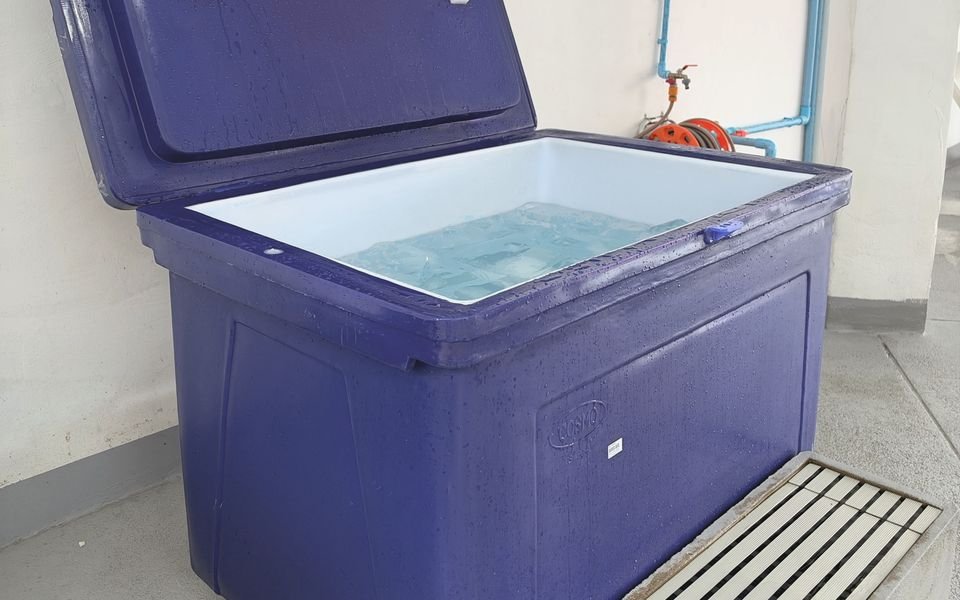
The cold side is the ice bath and plunge pools. The ice bath is a lidded blue tub of water and ice with a step beside it. Three signs set the rules: shower before you use the ice plunge, close the
A typical round here: shower, a round in the sauna and steam room, a cold shower, a short plunge, then a rest on a lounger with water or a fresh coconut. Men and women have separate changing rooms with lockers and showers. Day passes and memberships are on the prices page.
Common mistakes to avoid
- Staying in too long. Longer is not better in either the heat or the cold. Leave while you still feel in control.
- Alcohol before or between rounds. It makes overheating and fainting more likely; save the beer for the end of the day.
- Jumping in head first. Cold water shock makes you gasp. Lower yourself in feet first and keep your head above the water.
- Skipping the rest. The pause between rounds is part of the routine. Sit down, warm up naturally and drink water; thirst, a headache and feeling
light-headed are early signs of dehydration. - Treating it as a contest. Your neighbour's ten minutes in the ice is not your target. Shivering that will not stop, numbness or chest pain mean stop for the day.
Sources
- Harvard Health Publishing: Saunas and your health
- Bleakley et al. (2012), Cochrane Database of Systematic Reviews:
cold-water immersion for muscle soreness after exercise (PubMed) - Bieuzen et al. (2013), PLOS ONE: contrast water therapy and
exercise-induced muscle damage (PubMed) - Cain et al. (2025), PLOS ONE: effects of
cold-water immersion on health and wellbeing, a systematic review andmeta-analysis (PubMed) - Laukkanen et al. (2015), JAMA Internal Medicine: sauna bathing and fatal cardiovascular events (PubMed)
- Roberts et al. (2015), Journal of Physiology: cold water immersion after strength training (PubMed)
- Met Office: Cold water shock, what it is and how to stay safe
- NHS: Dehydration